A Campsite Arrival Before Dusk
A campsite arrival before dusk is easier with a clear routine: choose a suitable spot, settle immediate needs and use the remaining light wisely.
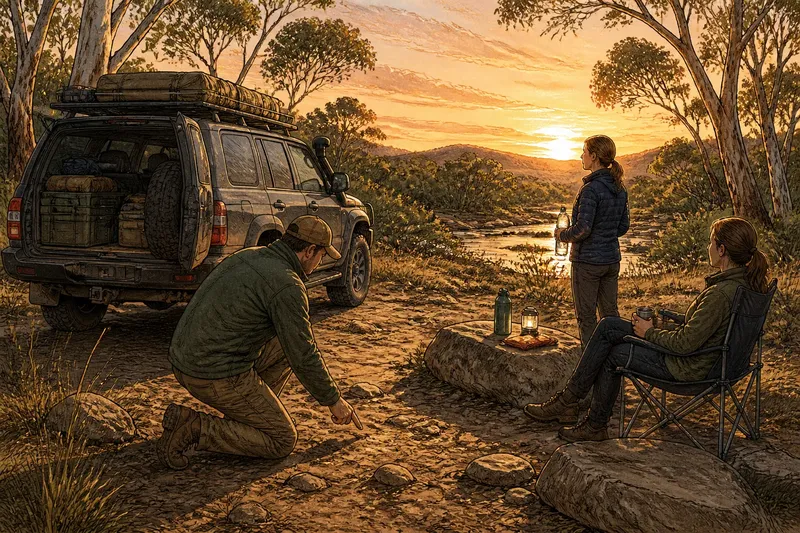
What should you do with the daylight after reaching camp? A campsite arrival before dusk gives you time to assess the site, settle immediate needs and decide what must be done before the light fades. Start with a pause, then use the remaining daylight for the tasks that would be awkward to leave until later.
This is a routine for the period between pulling in and settling for the evening. It is not a vehicle or shelter setup manual: the aim is to make a few clear decisions while everyone can still see the ground and move about comfortably.
Pause and check the site before committing
Stop where the vehicle and occupants can wait without blocking a track, access point or shared area. Before unloading, look at the ground, nearby activity and the routes people use on foot. Notice whether the spot is exposed, muddy, uneven or close to other campers.
Check that the place suits your group’s immediate needs and does not interfere with others. If it feels awkward, decide whether to move the vehicle or change the intended sitting area before anything is taken out.
Ask the group what would make the next part of the evening manageable. Someone may need water, a warm layer or a quiet pause before taking on a task.
Use the remaining daylight for time-sensitive decisions
Once you have chosen where to pause, decide what needs attention while visibility is good. Think about the route between the vehicle and the place you intend to sit, whether anyone needs to use the toilet, and whether the group has a clear plan for the evening. Leave optional rearranging until later.
Keep the plan short. If a task depends on seeing the ground or making a choice before darkness, do it now; if it can wait without causing discomfort or confusion, leave it for another time.
- Check the walking route for holes, loose stones or other obstacles; if it is clear, use it as planned, but if it is awkward, choose a safer route before people start carrying things.
- Check whether anyone needs a toilet break before the light fades; if so, agree on the appropriate route and meeting point, but if not, continue with the group’s next priority.
- Check whether the group has agreed where to sit; if everyone understands the plan, move on, but if people disagree, settle the choice before arranging the area.
- Check whether a person is cold, hungry or exhausted; if so, address that immediate need, but if everyone is comfortable, avoid opening supplies without a reason.
- Check whether the vehicle is positioned considerately; if it blocks access or makes movement difficult, reposition it now, but if it leaves the site usable, keep it where it is.
- Check whether any planned task depends on daylight; if it does, do that task before darkness, but if it does not, defer it and let the group rest.
Bring out only what the group needs first
Choose the first few items according to the group’s actual needs, not a fixed unpacking order. Drinking water, a torch, warm clothing or a place to sit may be useful straight away. Leave cooking equipment or spare clothing put away if nobody needs them yet.
Agree who will handle any immediate task, and make sure no one assumes that the driver must organise everything. A person who needs to rest can say so; another can take the task if it is necessary.
Say you arrive with two companions while daylight is fading. One is hungry, and the other feels tired but comfortable. You agree that the hungry person gets a ready-to-eat snack and water, you check the walking route and choose a sitting place, and the tired companion rests in the vehicle. The result is that the immediate need is met, the route is checked while visible, and no one opens cooking gear or rearranges the whole camp before it is needed.
Decide what can wait until later
Once urgent needs and daylight-dependent choices are handled, stop adding tasks. A more elaborate sitting arrangement, optional sorting or a detailed plan for the next day can wait if it does not affect comfort or access.
Before the group settles, say what is ready and what remains undecided. Keep this exchange brief: it should prevent crossed expectations, not turn the evening into a meeting.
What should you do when the arrival plan changes?
What if we arrive later than planned?
Answer the immediate needs first and shorten the routine. Check that the vehicle and group are in a suitable place, deal with any task that depends on visibility, and defer anything optional.
How do we choose who handles a task?
Ask who is able to help at that moment and assign only tasks that matter before the group settles. If someone is tired or uncomfortable, let them pause while another person takes a necessary job.
What should we do before darkness?
Use the remaining light to inspect the ground and agree on any route or arrangement the group needs to use safely. Leave tasks that can be completed later without causing confusion or discomfort.
When should we stop organising?
Stop when everyone’s immediate needs are met, the group knows where it will sit and any daylight-dependent decisions are settled. If another task is optional, leave it until there is a clear reason to do it.
Settle in without turning arrival into a project
Take one last look at the walking route and check that the group knows what is still planned for the evening. If people will step away from the group, agree where to meet again. Then sit down and let the evening begin.
A campsite arrival before dusk is most useful when you spend the remaining light on decisions that genuinely depend on it. Once those are made, choose rest over unnecessary rearranging.