Why a Route Needs More Than a Distance
Route planning needs more than distance: account for road conditions, pauses and uncertainty to build a useful outline you can adjust as you travel.
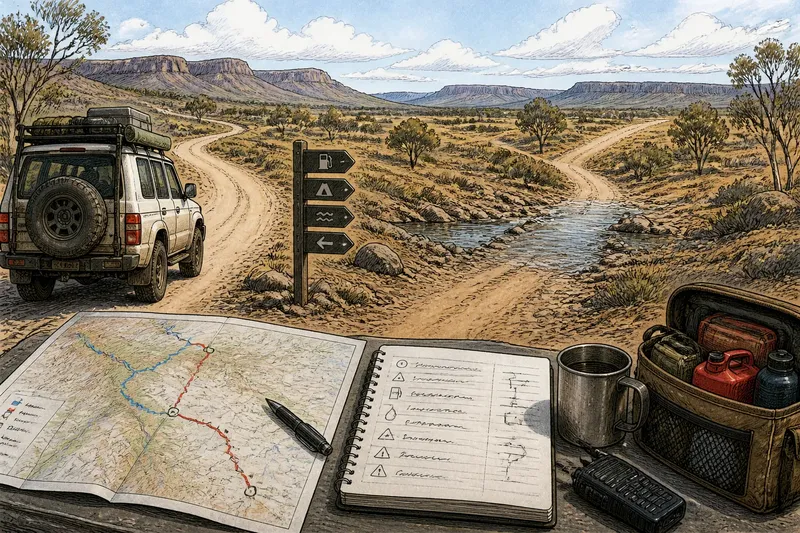
How long will this drive really take? Route planning needs more than distance because a four-wheel-drive journey is shaped by surfaces, stops and changing conditions as well as the line between two places. A useful outline leaves room for those influences without pretending to predict every delay.
Think of a route as a sequence of decisions, not a promise to arrive at a particular hour. These ten considerations help turn a distance into a plan that can adapt on the ground.
1. Separate distance from driving time
A route’s length is easy to see on a map; the effort required to cover it is harder to judge. A short section of corrugated track, loose gravel or steep, winding road may demand more attention and slower progress than a longer stretch of sealed highway. Treat distance as a description of how far, not as a reliable forecast of how long.
For each leg, note the broad road type and where it changes. A paved approach, a maintained gravel road and a rough station track call for different expectations, even if they occupy the same line on a map. Use current local information and any available track notes to identify difficult sections, but retain room for conditions to differ from the description.
Say you are planning a drive from a town to a recognised camping area via sealed road and a gravel access track. Rather than treating the whole leg as one continuous drive, mark the point where the surface changes and give the gravel section more flexibility. If it is rougher than expected, you can reconsider the day’s remaining plan before fatigue or fading light makes the choice for you.
2. Break the route at meaningful decision points
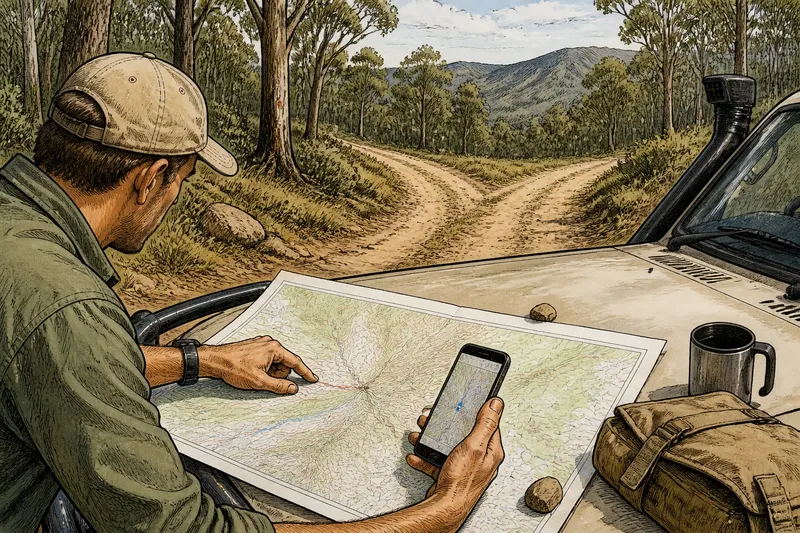
Divide a long day into legs that end at places where you can make a useful choice: a town, a junction, a known fuel stop, a rest area or a suitable turn-off. This creates natural opportunities to check how the day is unfolding. It also makes the route easier to explain to another traveller than a single distant destination does.
At each decision point, record what comes next and what alternatives exist. One junction might lead towards the intended camp, while another option returns to a surfaced road or a settled area. The point is not to create several elaborate itineraries. It is to know where a practical change of direction is possible before you need one.
Keep the notes brief: place name, next leg, relevant turn and an alternative if there is one. Leave detailed navigation to the map you are using; the outline should help you understand the day’s choices at a glance.
3. Put pauses into the shape of the day
Travel time includes more than the minutes spent moving. You may stop to stretch, eat, refill water, check a tyre, speak with a local contact or let another vehicle pass on a narrow section. These pauses are part of travelling, not interruptions that have to be squeezed out of an ideal schedule.
Mark the stops that matter to your route. A planned fuel stop or a place to rest can anchor the day; a viewpoint or short walk may be optional. If all stops are treated as fixed appointments, a small change early in the day can make the rest feel hurried. Distinguishing necessary pauses from discretionary ones helps you decide what to shorten without losing the essentials.
Choose stopping places that are suitable for the vehicle and the situation. A roadside lay-by, a signed rest area and a narrow track edge are not interchangeable. If a safe, appropriate place is not apparent, keep moving to one rather than stopping simply because the outline shows a pause nearby.
4. Give uncertain sections their own margin
Some parts of a route are more difficult to predict than others. A dry-weather track may change after rain; roadworks, local traffic, livestock or temporary closures may alter progress. Rather than adding an arbitrary allowance to every leg, mark the sections where conditions could change your choices.
For each uncertain section, ask what you would need to know before continuing: whether the road is open, whether a crossing is passable, or whether the route is suitable for your vehicle and experience. Decide where you can check for an update and where you can turn back or choose another road. A margin is useful when it creates options, not merely when it makes the planned arrival later.
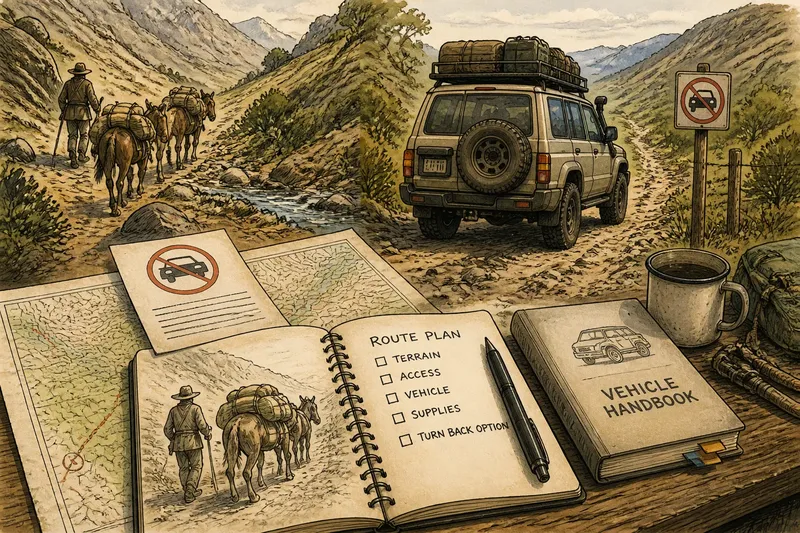
If a route crosses land with access conditions set by a managing authority or private landholder, check the relevant local rules and current notices before setting out. Keep that information with the notes for the section it affects, so it is easy to find at the decision point.
5. Plan the day around a sensible stopping place
Choose an intended stopping place before you begin the day, then identify a nearby alternative where practical. The intended stop should fit your route, vehicle and travel needs; the alternative should give you a way to change the plan if progress slows. This is more useful than fixing your whole day to a precise arrival time.
Make the stopping decision before you are tired or pressed for light. If the current pace makes the intended destination look doubtful, compare the remaining route with the alternative and decide early. That may mean ending the drive sooner, changing the next day’s route or dropping an optional detour.
For an overnight stay, check access and any booking or entry requirements in advance. A destination that looks close on a map may still involve a long approach, and arriving at a closed gate or unsuitable access road can leave few convenient choices.
6. Treat fuel, water and supplies as route constraints
Route planning should account for where essential supplies are available, not assume that every settlement or junction offers them. Mark fuel stops and any other points your journey depends on, such as a place to refill water or collect a pre-arranged key. Note whether a stop is essential, optional or only a possible fallback.
Before setting out, compare the planned legs with the vehicle’s needs and the information you have about services. If a supply point is uncertain, seek an up-to-date local answer or choose a route with a more dependable option. Do not build the day around a stop whose availability you have not checked when missing it would leave no reasonable alternative.
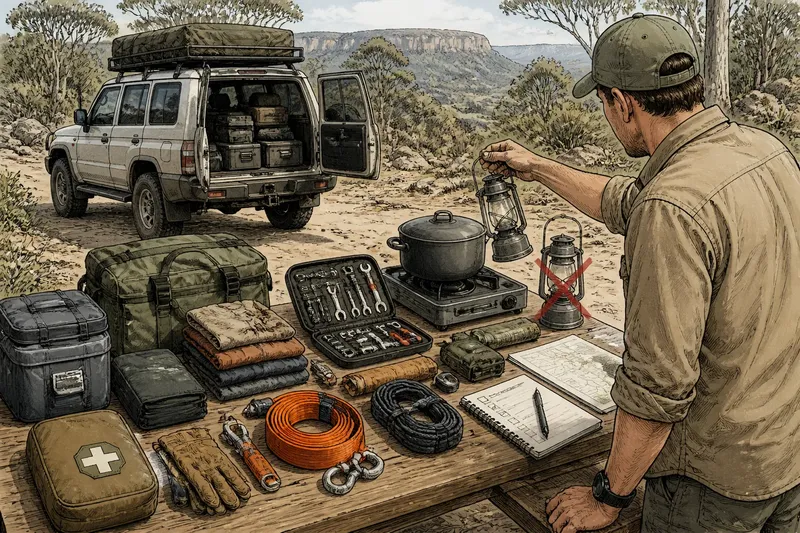
Keep supplies that you need during the day accessible without unpacking the whole vehicle. The route outline can note the next resupply opportunity, while your packing arrangement makes it practical to use that information.
7. Use fixed times only where they affect a real decision
Some appointments have a genuine time constraint: a booked crossing, a reception that closes, or access that is restricted to particular hours. Mark these clearly because they affect which route choices remain available. For ordinary driving legs, a narrow arrival target can create pressure without improving the plan.
Work backwards from a real deadline and identify the latest point at which you can change course. If reaching a booked stop becomes doubtful, contacting the provider or selecting an alternative early is more useful than trying to recover time through hurried driving. Keep optional activities separate from obligations so that a scenic detour does not quietly become a source of stress.
Where no fixed access or booking time applies, use a broad expectation and review it as the day unfolds. That leaves space for a stop that matters or a slower section that deserves care.
8. Build an outline that is easy to revise
A route note is more helpful when you can change it without rewriting the whole day. Keep the main sequence of places, the key junctions, essential stops and alternatives together. Use a pencil, a note-taking app or a printed itinerary that can be amended; the tool matters less than being able to find the current plan quickly.
Separate confirmed information from assumptions. A road closure notice or a confirmed booking is different from an estimated drive time or an unverified service stop. Marking that difference helps you know which parts need checking as conditions change.
When you revise the route, update the next leg and the new stopping plan, not just the destination. Tell anyone travelling with you what has changed, particularly if the change affects fuel, supplies or where you expect to stop.
Which route details deserve a check before departure?
Should I plan every stop in advance?
Plan the stops that support safety, supplies, access or a real commitment, and leave optional pauses flexible. That gives you a working structure without turning each stretch into an appointment.
How should I handle a track with uncertain conditions?
Find the most current information available, identify the point where you can reassess, and note a viable alternative before committing to the section. If conditions are unsuitable for your vehicle or experience, choose another route rather than relying on a hopeful estimate.
What should I do if the day is running late?
Review the remaining route at the next suitable stopping point and decide whether to shorten the plan, change destination or stop earlier. Avoid trying to make up time by driving faster on unfamiliar or difficult roads.
How detailed should a route outline be?
Include enough detail to recognise each leg, its important turns, supply points, uncertainties and alternatives. If a note does not help you make a decision or find your way, it may not belong in the outline.
9. Review progress at places where stopping makes sense
Check the plan at a town, rest area or other appropriate place, rather than while driving. Compare your position and remaining daylight with the intended stop, then look at the next leg and any relevant update. A simple check can reveal that the original plan still fits, or that it is time to use an alternative.
Make the adjustment while you still have choices. If a road is slower than expected, the right response may be to skip an optional stop or choose a shorter route to camp. If the route is going smoothly, do not treat the unused flexibility as a reason to add a demanding detour without considering its effect on the rest of the day.
Keep the vehicle stationary and safely parked while consulting a map or changing the outline. A route check should not compete with attention to the road.
10. Keep a simple record for the next leg
At the end of a driving day, note any information that could shape the next part: a changed road condition, a service that was unavailable, a turn that was difficult to recognise or a stop that worked well. Keep observations factual and distinguish them from guesses. Conditions may change, so a personal note is a prompt to check rather than a replacement for current local information.
Use the record to improve tomorrow’s choices, not to preserve a rigid itinerary. If the day’s progress altered your intended route, update the next leg and tell your travelling companions. The most useful route planning is an outline that can absorb new information while keeping the next decision clear.
When you plan a route, put the likely pauses and uncertain sections beside the distance, then leave at least one sensible choice open. That small habit makes a route outline more useful precisely because it does not pretend to predict the whole journey.