From Pack Trail to Motor Journey: How Overland Travel Changed
Pack trail to motor journey history explains how vehicles changed travel—and helps four-wheel-drive drivers judge access, terrain and their responsibilities.
How did travel change from a pack trail to a motor journey, and what does that shift mean for a four-wheel-drive driver today? The pack trail to motor journey story is not a single timeline shared by every region: it is a way to compare what people and vehicles require from the ground beneath them.
Older routes reflected local needs and terrain
Across many landscapes, people travelled on foot, with animals, by water or along routes connecting places they needed to reach. The reasons and routes differed between communities and regions, so it is more accurate to think of many local networks than one universal trail system. A path might follow a usable slope, reach a crossing or connect neighbouring settlements; its precise purpose depended on its setting.
Pack animals could carry loads that would be difficult for a person to manage alone, but they still needed suitable footing, water and, where relevant, fodder. Narrow tracks and steep or soft ground could shape how a journey was made. A traveller on foot or with an animal had to respond to those conditions directly.
Wheels made route conditions more decisive
Carts and wagons could carry bulky goods, but needed enough width and a surface that their wheels could cross. A path that worked for a person or pack animal might not suit a wheeled load. This did not make terrain less important; it changed which features could stop progress.
Motor vehicles brought an engine and the ability to carry people and equipment together. They also made a journey depend on a working vehicle, suitable fuel, tyres and other components. A track’s appearance alone cannot tell a driver whether it is suitable for a particular vehicle or current conditions.
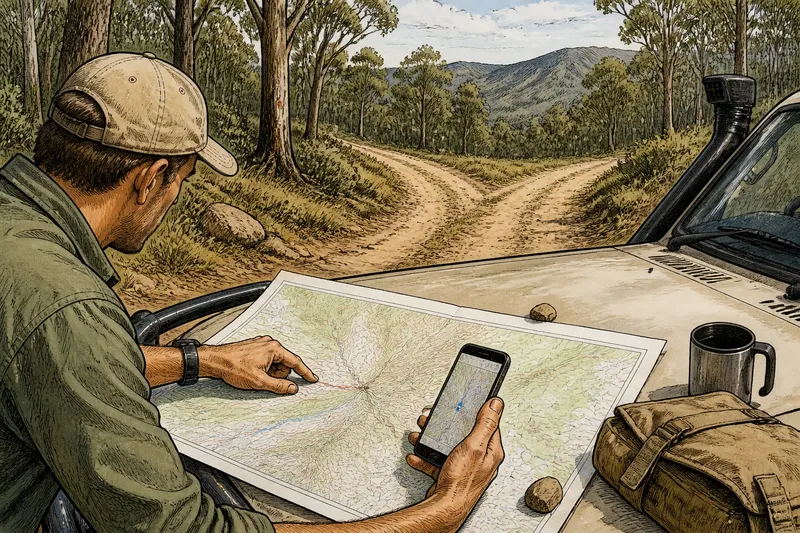
Say you reach a muddy track with a shallow-looking crossing. You stop, check for signs, confirm that motor access is permitted, and assess the surface and the route back without driving into the water. If the crossing’s depth or firmness remains unclear, the decision is to turn back or seek reliable local advice rather than treat the visible track as proof of safe passage.
Motor journeys added new responsibilities
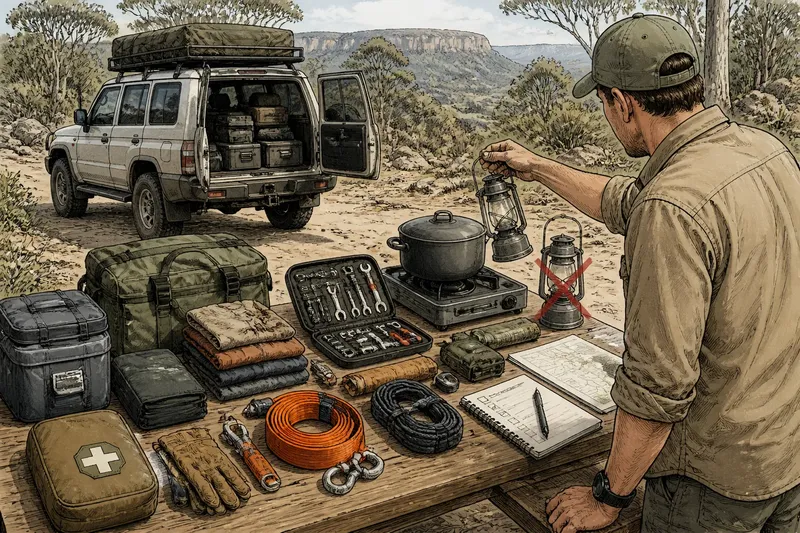
A vehicle can carry shelter, food and equipment, but that load does not remove the need to manage a journey carefully. The driver must understand the vehicle’s limits and respond to changing ground, access restrictions and mechanical problems. More carrying capacity can make a trip feel easier to organise, yet a vehicle that cannot continue may leave its occupants with a different problem from someone travelling on foot.
Self-reliance in a motor vehicle means knowing what you can handle and when to stop. Keep essential items accessible, use equipment only for tasks you understand, and follow the vehicle maker’s instructions for safety-critical work. If a mechanical issue needs specialist attention, contact a qualified professional rather than improvising a repair.
Check the vehicle handbook before departure, and leave unfamiliar mechanical work to someone qualified.
Old route lines do not grant permission to drive
Some roads and tracks follow corridors shaped by earlier movement, while others have been altered or built for different purposes. A valley, pass or river approach may influence how a route runs, but that resemblance does not establish its history or make it suitable for vehicles. Conditions, ownership and access rules can change.
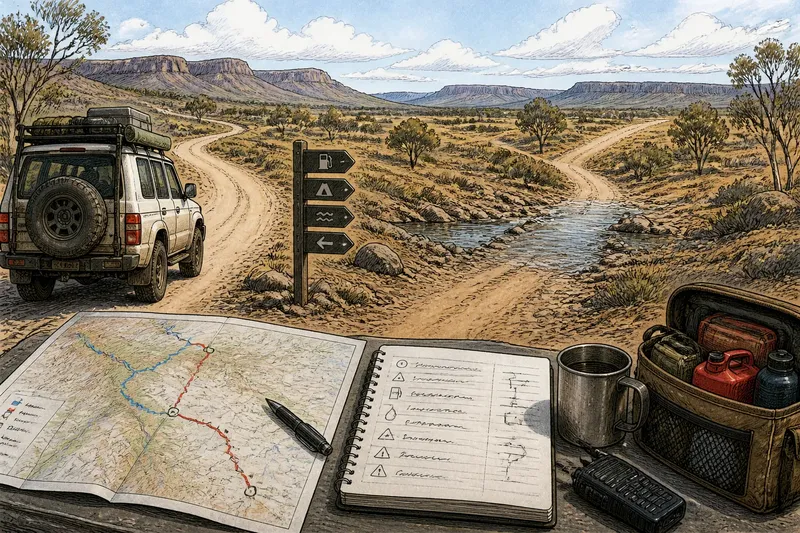
Before setting out, check current local access information and obey signs and restrictions. A route that appears on a map or looks well used may cross private land, be closed to motor traffic or pass through a sensitive area. If access is unclear, do not enter until you have confirmed the rules with an appropriate local source.
Use route history as context, not as permission or a substitute for checking the ground.
What does the pack trail to motor journey shift mean?
Did motor roads replace older routes?
Not everywhere, and not in one simple sequence. Routes changed differently across regions; some older paths continued in use, while others were altered, abandoned or given new purposes.
Why might an old trail be unsuitable for a four-wheel drive?
It may be too narrow, have a surface or gradient unsuitable for the vehicle, or be closed to motor traffic. Check current access rules and conditions before entering.
What new dependencies came with motor travel?
Motor travel depends on a functioning vehicle and the supplies and support needed to use it. Drivers also need to account for access rules and the consequences of stopping where assistance may be limited.
What does older travel teach a modern driver?
It is a reminder to judge a route by the conditions it presents, rather than by the load a vehicle can carry. Be prepared to stop or turn back when access, ground or vehicle capability is uncertain.
Compare the demands of each kind of travel
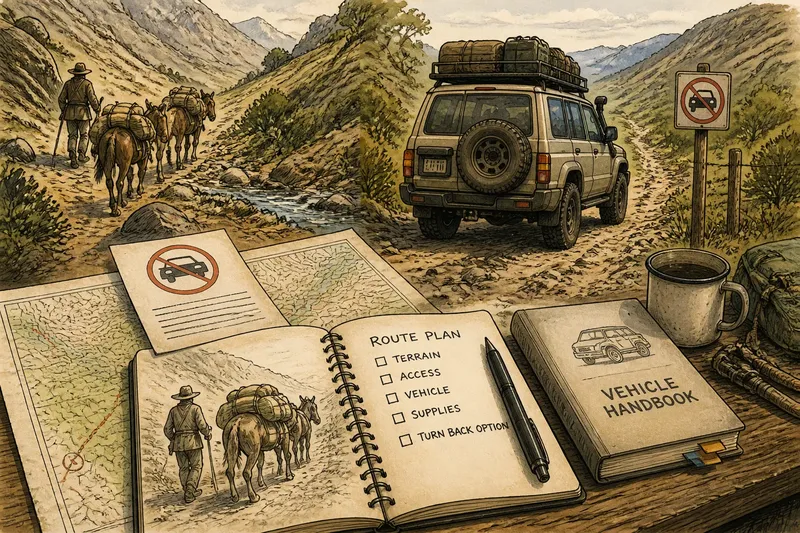
Imagine a driver planning a short visit to a remote viewpoint. The starting point is a map showing a track, a vehicle handbook and an access notice from the relevant local authority stating that the route is closed to motor traffic. The driver checks the notice against the track’s name, confirms it applies to the planned approach, and removes that route from the plan. The resulting decision is to visit by a permitted route instead, or choose another destination; the vehicle’s capability does not change the access rule.
That comparison captures the lasting change from pack trail to motor journey. Vehicles altered what could be carried and how movement was managed, but they did not remove the need to respect terrain, local knowledge and the rules governing a route. The most useful question remains whether the journey is appropriate for the ground, the vehicle and the people travelling in it.